









History of Waitangi - Birthplace of Our Nation
Photographer: Ben Crawford
(www.bencrawford.co.nz)
In 1840, Māori and Europeans joined together to sign the Treaty of Waitangi. This document forms the basis of our nation and was signed at the Treaty House in the small village of Waitangi in the Bay of Islands.
Waitangi is a place that all New Zealanders belong to—it's a ‘must see’ for any visitor interested in New Zealand's history and culture.
The Treaty House stands proudly amidst a vast, peaceful park at Waitangi, in the beautiful Bay of Islands. Visitors can organise tours of the Waitangi Treaty Grounds, with personal stories and historical accounts.
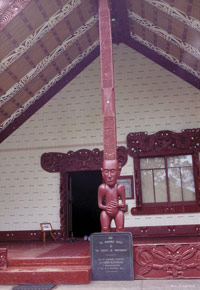
Also of interest on the Waitangi Treaty Grounds site is a fully carved Māori Meeting House, one of the largest remaining Māori war canoes and a superb Visitor Centre and Gallery.
The Treaty Grounds are open from 9 am - 5 pm daily, and from 9 am to 7 pm daily from 23rd October to 26th April.
Treaty of Waitangi
In 1840 representatives of the British Crown and over 500 Māori chiefs signed the Treaty of Waitangi, an agreement between Māori chiefs and the British Crown. The treaty was an exchange of promises establishing British law in New Zealand, as well as guaranteeing Māori authority over their land and culture. The treaty still serves as the founding document for the nation of New Zealand.
The British Government sent Captain William Hobson to New Zealand with the mission of acquiring sovereignty of the country by way of a treaty.
The treaty was duly drawn up, translated and signed by 43 Northland chiefs followed by over 500 other Māori chiefs in 1840. The Treaty of Waitangi remains central to New Zealand law and society.
With two language versions; Māori and English, written and translated by people with little or no legal know-how, these versions differ to such an extent that there have been problems of interpretation.
For example, in regard to sovereignty the English version states that Māori surrender their 'kawanatanga' (sovereignty) and transfer power to the British Crown while the Māori version implies a sharing of power.
Some may ask which version of the Treaty is the correct one. The answer is both. Since two versions were signed, both are taken into account and regard is given to each document when decisions are being made.
Waitangi Day
Every year on 6th February, New Zealand marks the signing of the Treaty of Waitangi by taking a national holiday.
Waitangi Day is recognised as New Zealand's national day and is an important marker in New Zealand's history.
Waitangi day was first officially commemorated in 1934, and it has been a public holiday since 1974.
For further information on Northland view our Northland regional information section.