









 New Zealand History
New Zealand | Regional Information | Activity Highlights | Scenic Highlights | History
With over a thousand years of human settlement, New Zealand has a colourful and dramatic history, dominated by the relationship between Māori and Europeans.



New Zealand History Overview
While New Zealand is a relatively young country, it has a rich and fascinating history, reflecting both our Māori and European heritage. Amazing Māori historic sites and taonga (treasures), some dating back almost a thousand years, are a contrast to many beautiful colonial buildings. A walk around any New Zealand city today shows what a culturally diverse and fascinating country we have become.
Early Settlement
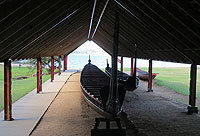
According to Māori, the first explorer to reach New Zealand was Kupe. Using the stars and ocean currents as his navigational guides, he ventured across the Pacific on his waka hourua (voyaging canoe) from his ancestral Polynesian homeland of Hawaiki. It is thought that Kupe made landfall at the Hokianga Harbour in Northland, around 1,000 years ago.
Māori were expert hunters and fishermen. As mostly coastal dwellers, fishing was vitally important to them. It also played a part in their mythology—the god, Maui, was believed to have 'fished up' the North Island. Māori wove fishing nets from harakeke (flax), and carved fishhooks from bone and stone. Māori considered whales as kaitiaki (guardians), and used their flesh for food and their hard, strong bones for weapons. A Māori tradition that remains today is to throw back the first fish caught. This is a way of thanking Tangaroa, god of the sea, for his bounty.
Moriori
While Māori lived throughout the North and South Islands, the Moriori, another Polynesian tribe, lived on the Chatham Islands, nearly 900 kilometres east of Christchurch. Moriori are believed to have migrated to the Chathams from the South Island of New Zealand. In the late 18th century there were about 2,000 Moriori living on the Chathams. However, disease and attacks from Māori saw the numbers of this peace-loving tribe become severely depleted. The last full-blooded Moriori is believed to have died in 1933.
Colonisation
Eastland
Photographer: Ian Trafford
(www.iantraffordphotos.com)
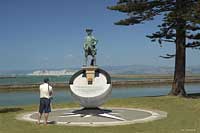
The first European to sight New Zealand was Dutch explorer named Abel Tasman. He was on an expedition to discover a great Southern continent, 'Great South Land', that was believed to be rich in minerals. In 1642, while searching for this continent, Tasman sighted a 'large high-lying land' off the West Coast of the South Island.
In 1769 Captain James Cook sighted New Zealand and successfully circumnavigated and mapped the country. Early settlers were mainly whalers, sealers, and missionaries who came to New Zealand. These settlers had considerable contact with Māori, especially in coastal areas. Māori and Pakeha (Europeans) traded extensively, and some Europeans lived among Māori.
With growing numbers of British migrants, and a dwindling and largely landless Māori population, British culture dominated New Zealand life throughout the 19th and first half of the 20th centuries. However, since World War II, New Zealand has moved towards its own unique national identity and place in the world.
Treaty of Waitangi
Photographer: Ben Crawford
(www.bencrawford.co.nz)
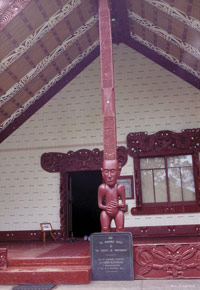
In 1840 the Treaty of Waitangi was drawn up, an agreement between the British Crown and Māori. It established British law in New Zealand, while at the same time guaranteeing Māori authority over their land and culture. The Treaty is considered New Zealand's founding document.
After a day of debate, the Treaty of Waitangi was signed on February 6, 1840, at Waitangi in the Bay of Islands. Forty-three Northland chiefs signed the treaty on that day. Over 500 Māori Chiefs signed it as it was taken around the country during the next eight months.
In 1975, the government established the Waitangi Tribunal. This tribunal was established to honour the treaty as a relevant and living document. Since then, the Waitangi Tribunal has ruled on a number of claims brought by Māori iwi (tribes). In many cases, compensation, often in the form of financial payments and land, has been granted. In the last ten years, some particularly large settlements have been made between the Government and major iwi, including Tainui of the Waikato, and Ngai Tahu of the South Island. Much of the compensation has been invested in order to provide educational and health services for members of the iwi.
New Zealand Wide Accommodation
New Zealand is a popular tourist destination and offers a wide range of country-wide accommodation options:
- New Zealand Motels
- New Zealand Hotels
- New Zealand Bed and Breakfasts
- New Zealand Holiday Houses
- New Zealand Campsites and Holiday Parks
View more New Zealand Accommodation options.
Useful New Zealand Wide Links
To help plan your New Zealand holiday choose from the main categories below:
- New Zealand Accommodation
- New Zealand Tours
- New Zealand Attractions and Activities
- New Zealand Transport
- New Zealand Cuisine and Dining
- New Zealand Shopping
- New Zealand Visitor Information
New Zealand Wide Information
 Regional Information
Key information and facts about New Zealand.
 Activity Highlights
Major activities and attractions throughout New Zealand.
 Scenic Highlights
Major natural attractions throughout New Zealand.
 History
History of New Zealand.
New Zealand Tourism Operators
Choose from our accommodation, attractions, tours, transport or visitor information categories below to find a tourism operator throughout New Zealand.