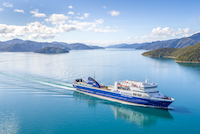










 Marlborough History
Tourism Operators | Discover Marlborough | Activity Highlights | Scenic Highlights | History
Marlborough is New Zealand's largest grape-growing and wine-making region, and has offered safe harbour to travellers for centuries.



Marlborough History Overview
For centuries, Marlborough has offered safe harbour to travellers. First to Māori traders and war parties; then to European explorers, such as Captain James Cook and Dumont D'Urville; and now to visitors seeking new landscapes and rejuvenating experiences.
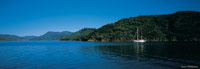
Marlborough, New Zealand
Photographer Ivor Wilkins
(ivorw@xtra.co.nz)
If you arrive in the region by sea or air, the intricate detail of the Marlborough Sounds engages your interest immediately. Māori legend describes the entire South Island as Maui's waka (canoe), wrecked on a reef during a fishing expedition. The shattered bow of the canoe became the Sounds.
D'Urville Island
At the outer edges of the Marlborough Sounds, New Zealand's fifth largest land mass offers a quiet sanctuary from the modern world.
Large areas of ancient native forest provide an attractive setting for hiking. Sweeping views across the surrounding ocean and Marlborough Sounds reward those who climb to the peaks. Free from most mammalian predators, the island has plenty of birdlife and the dawn chorus is particularly memorable.
The island is named after the French explorer, Admiral Jules Cesar Dumont D'Urville. He came close to losing his ship, the Astrolabe, as he navigated the treacherous currents that sweep through French Pass between the island and the mainland.
Pelorus Bridge
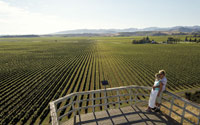
Marlborough, New Zealand
Photographer: Ian Trafford
(www.iantraffordphotos.com)
Halfway between Blenheim and Nelson, where a bridge crosses the Pelorus River, there is a beautiful scenic reserve that has some of the most accessible examples of mature native forest in the Marlborough region.
The valley was the site of a massacre of the Ngati Kuia and Ngati Apa tribes by the Māori chief Te Rauparaha, who came from the North Island coast, west of Wellington.
The first Europeans to arrive in 1843 found a few remaining Māori people producing flax for Te Rauparaha. The original route to Nelson went through the reserve site and over the Maungatapu Saddle. Later, the path that the road follows today was discovered, and a bridge was built across the Pelorus River around 1860.
The Pelorus Bridge location was set aside for a future township, but in the early 1900s this was changed to preserve the area's natural beauty. The present bridge was built in the 1950s.
The story of Tuhirangi, otherwise known as Pelorus Jack
Tuhirangi was the taniwha who guided Kupe's ship from Hawaiki, the ancestral home of the Māori people. On arrival in Aotearoa, Tuhirangi took up residence in the dangerous waters at Te Au-miti (French Pass). He lives in a cave known as Kaikaiawaro.
In the late 19th century, a white dolphin frequented a stretch of water just north of French Pass. The dolphin regularly met and accompanied passing ships. Māori people naturally recognised the dolphin as Tuhirangi, while the European settlers called it Pelorus Jack.
Useful Marlborough Links
To help plan your Marlborough holiday choose from the main categories below:
- Marlborough Accommodation
- Marlborough Tours
- Marlborough Attractions and Activities
- Marlborough Transport
- Marlborough Dining
- Marlborough Shopping
- Marlborough Visitor Information
Marlborough Region Information
 Regional Information
Key information and facts about the Marlborough region.
 Activity Highlights
Major activities and attractions in the Marlborough region.
 Scenic Highlights
Major natural attractions in the Marlborough region.
 History
History of the Marlborough region.
Marlborough Tourism Operators
Choose from our accommodation, attractions, tours, transport or visitor information categories below to find a tourism operator in Marlborough.