









 Waikato History
Waikato | Regional Information | Activity Highlights | Scenic Highlights | History
Explore the beauty and history of the awe-inspiring Waikato region. Discover the ancient stalagmites and stalactites and study the Māori history of the Waikato region.



Waikato History Overview
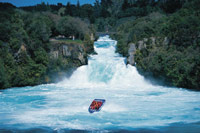
Waikato River, Waikato
Photographer: Huka Jet
(www.hukajet.co.nz)
Waikato was the scene of significant battles during the Māori Land Wars of the mid 19th century. Today you can visit the monuments and museums dedicated in their honour and discover the fierce history of the region.
In the fast-growing city of Hamilton, the serpentine beauty of the Waikato River is maximised at every opportunity. Discover parks, gardens and river walks where the forethought of the town planners is plain to see. Or take a trip to Ngaruawahia, one of the oldest and most historic settlements in the Waikato region.
Early History
The Waikato area is thought to have been settled as early as the 14th century by Māori settlers, with many pa (villages) being established throughout the region. Over time many Māori warriors and tribes grew throughout the region.
In the early 1800s intense Māori tribal warfare broke out. European traders traded muskets and weaponry for flax, escalating the warfare.
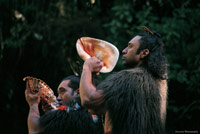
Traditional Māori Instrument
Photographer: James Heremaia
(www.jamesfoto.com)
In the 1830s European missionaries began to arrive, and by the 1840s peace was established. However Māori resistance to increasing land sales to European settlers started the land wars of the 1860s. In 1863 the New Zealand Settlements Act was established and 500,000 hectares of land was confiscated from the Māori people.
Once the land wars were settled, land clearing and development began. It proved difficult due to the boggy swamps of the Hauraki Plains, and the steep slopes of the Kaimai Ranges.
In the 1880s dairy farming became the main agricultural activity.
Hamilton, proclaimed a borough in 1877, was named after Captain John Charles Fane Hamilton, who fell in the battle of Gate Pa. The town's strategic location on the Waikato River led to it becoming the busy centre of economic activity.
As of the 2006 Census, Hamilton City holds a resident population of 129,249.
Ngaruawahia - a small town with a big history
Ngaruawahia is one of the oldest and most historic settlements in the Waikato and was once planned as the capital of New Zealand because of its strategic location. Strong cultural ties have long been a characteristic of the township. Turangawaewae Marae, on the northern bank of the Waikato River, is the official residence of the reigning Māori monarch Te Arikinui Te Atairangikaahu.
Ngaruawahia is located at the junction of two great rivers—Waikato and Waipa. These rivers were once canoe routes of great importance to Māori, and later to European settlers. While in Ngaruawahia, ask where to find the Hakarimata walkways—the best known of these is a three hour round trip walk with views over the Waikato River. Taupiri Mountain, which watches over Ngaruawahia, is sacred and contains the Waikato's most significant burial ground.
» Ngaruawahia Travel Directory
Useful Waikato Links
To help plan your Waikato holiday choose from the main categories below:
- Waikato Accommodation
- Waikato Tours
- Waikato Attractions and Activities
- Waikato Transport
- Waikato Dining
- Waikato Shopping
- Waikato Visitor Information
Waikato Region Information
 Regional Information
Key information and facts about the Waikato region.
 Activity Highlights
Major activities and attractions in the Waikato region.
 Scenic Highlights
Major natural attractions in the Waikato region.
 History
History of the Waikato region.
Waikato Tourism Operators
Choose from our accommodation, attractions, tours, transport or visitor information categories below to find a tourism operator in Waikato.