









 Rotorua History
Rotorua | Regional Information | Activity Highlights | Scenic Highlights | History
Rotorua has a long and interesting history with many famous Māori legends and stories surrounding the region. Explore the cultural and geothermal history of Rotorua.



Rotorua History Overview
Rotorua has been welcoming visitors for more than 200 years and is one of the original tourist destinations in New Zealand. A "special town district" was created in the 1880's, in order to promote Rotorua's potential as a spa.
The many geothermal hotspots, spouting geysers, boiling mud pools, warm geothermal springs and silica terraces are some of New Zealand's largest tourist attractions.
Send a Rotorua related E-Postcard to your friends.
Māori History
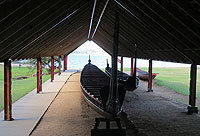
Rotorua, a Māori word meaning literally "second lake", was originally settled by the Māori of the Te Arawa iwi.
Many famous Māori legends and stories are based in this area including Hinemoa and Tutanekai—perhaps New Zealand's most famous love story, the beautiful Pink and White Terraces that were destroyed in the Mt Tarawera eruption, as well as many interesting Rotorua personalities.
Rotorua is the heartland of New Zealand Māori culture, and visitors have the opportunity to experience the warm spirit of Te Māori.
The founder of Rotorua was a Māori explorer named Ihenga in the 14th century. The first Māori inhabitants arrived shortly after his discovery, transported by canoe from Hawaiki in Eastern Polynesia.
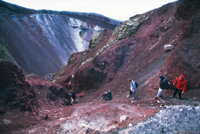
Photographer: Hiroshi Nameda
(hnamechan@hotmail.com)
Photographer: Waimangu Volcanic
Valley (www.waimangu.com)
Mount Tarawera 1886 Eruption
On the morning of June 10th, 1886 a series of small earthquakes were felt in the Rotorua area. At 1:30 am a larger earthquake was felt and followed by the sound of an explosion. By 2:30 am Mount Tarawera's three peaks had erupted blasting three distinct columns of smoke and ash thousands of metres into the sky. At 3:30 am the bed of Lake Rotomahana blew out.
The eruption of Mt Tarawera was heard as far way as Blenheim, in the South Island of New Zealand, and the effects of the ash in the air were observed as far south as Christchurch, located over 800 kilometres south of Rotorua.
The sound of the eruption and the flashing sky, heard as far away as Auckland, was thought by some to be an attack by Russian warships.
The eruption is believed to have killed over 120 people, although it is possible that more people died. The eruption also destroyed the Pink and White Terraces and buried the Māori village of Te Wairoa.
Many of the lakes surrounding Mt Tarawera had their shapes and areas dramatically altered because of the explosion.
Useful Rotorua Links
To help plan your Rotorua holiday choose from the main categories below:
- Rotorua Accommodation
- Rotorua Tours
- Rotorua Attractions and Activities
- Rotorua Transport
- Rotorua Cuisine and Dining
- Rotorua Shopping
- Rotorua Visitor Information
Send a Rotorua related E-Postcard to your friends.
Rotorua Region Information
 Regional Information
Key information and facts about the Rotorua region.
 Activity Highlights
Major activities and attractions in the Rotorua region.
 Scenic Highlights
Major natural attractions in the Rotorua region.
 History
History of the Rotorua region.
Rotorua Tourism Operators
Choose from our accommodation, attractions, tours, transport or visitor information categories below to find a tourism operator in Rotorua.